Housing and Living Environment

Housing is the foundation of daily life, in the city and in the villages. A suitable home provides stability, enables future plans, and helps people feel at home in their neighbourhood. In Groningen, many residents find this increasingly difficult. The housing crisis affects every generation, whether they currently have a home or not. Homes have become scarce, projects take too long, and affordable housing disappears faster than it is added.

It is the municipality’s responsibility to provide direction again. This requires clear priorities: building faster where possible, making better use of existing space, and involving residents seriously in changes to their living environment. A home is not a luxury product, but a basic provision. Residents must see that plans do not stall but lead to visible progress in neighbourhoods and villages.

The Partij vóór het Noorden chooses an approach that works in practice. We actively steer toward faster construction without compromising quality, with attention to the surroundings. Residents gain influence at an earlier stage, so participation guides plans from the outset rather than after the fact. We combine densification with liveability, so neighbourhoods become not only denser, but better.
What does the Partij vóór het Noorden want?

01 – Active direction on construction pace

In neighbourhoods such as Meerstad and Suikerzijde, building activity must be significantly increased, along with the number of amenities required to keep these areas liveable. We will set clear agreements per neighbourhood on the planning of housing and facilities and monitor progress monthly.

Delays will be identified earlier and the municipality will intervene sooner. Residents will notice this because plans stall less often and it becomes clearer what will happen and when.

02 – Affordable housing as the standard

In new projects, we steer toward a balanced mix of homes, with emphasis on affordability for all income levels. The municipality will use its land position and agreements with developers to enforce this.

This keeps housing accessible to different households.

03 – Faster use of available sites

Outdated business parks and other promising locations will be systematically assessed for housing development. The municipality will take the lead in redevelopment and provide clear frameworks. This will be done with respect for nearby green space and in consultation with residents.

04 – Actively tackling vacancy

Long-term vacancy is unacceptable in times of housing shortage. The municipality will implement an active vacancy policy, personally approaching property owners when buildings remain vacant for extended periods. Together, we will seek temporary or permanent use, with the aim of increasing available living and working space.

05 – High-rise where appropriate

We allow taller buildings in logical locations, provided they are carefully integrated into their surroundings. High-rise is a means of saving space and creating homes, not an end in itself. In such projects, we also consider the surrounding area, ensuring sufficient green space for views and recreation. Local residents will receive prior insight into plans and possible alternatives.

06 – Room for shared and collective housing

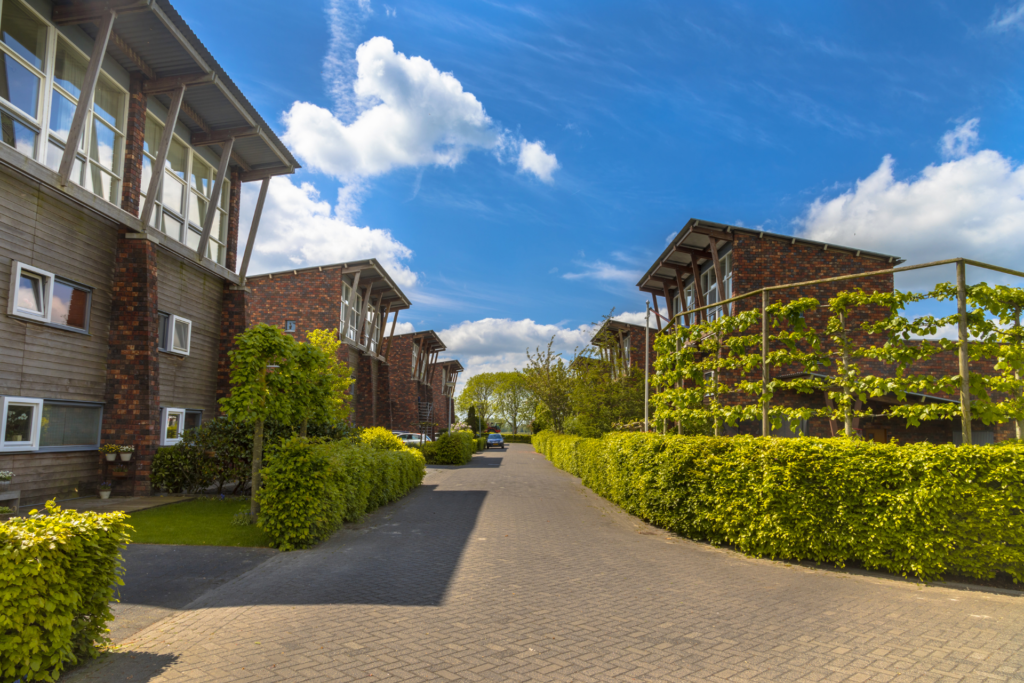
We will develop policy for various forms of shared and collective housing, such as Travertijnstraat and De Biotoop. Procedures will be simplified and clarified so residents know where they stand. This helps to make better use of existing housing space.

07 – Enabling new housing forms

In the midst of a housing crisis, Groningen must look differently at housing. The municipality should facilitate co-housing, modular homes, intergenerational living, and temporary or innovative housing concepts. We will apply fast but careful procedures with clear conditions. Initiators of new housing forms will experience less bureaucracy and quicker clarity.

08 – Cohabitation without housing loss

People receiving social assistance sometimes unnecessarily maintain two homes out of fear of income reduction. We advocate and will experiment with a temporary exemption from the cohabitation reduction, for example for a two-year period, if this results in a social rental home becoming available. This is fairer and more socially efficient.

09 – Supporting hofjes and Knarrenhof initiatives

We will actively make locations available for hofjes and Knarrenhof projects. Knarrenhof is a housing model in which older residents support one another within a shared living arrangement and fits well in Groningen. The municipality should assist with permits and coordination between parties. This provides future-proof housing and strengthens community life in neighbourhoods. Ebbingehof is a strong example of this approach.

10 – Early involvement of residents

In redevelopment projects, we begin with an open planning phase in which residents can contribute ideas. Feedback is a fixed part of the process, both online and offline, so residents know how their input is used. In new developments, there is always respect for existing green space and the living environment of nearby residents. In this way, we combine new development with preservation of valuable structures and natural elements in neighbourhoods and villages.

11 – More room for houseboats

The waiting list for houseboat moorings is long. In the development of new neighbourhoods, moorings will be structurally included, with attention to maritime heritage. This expands housing supply and strengthens Groningen’s historic identity as a water city.

12 – 10 percent scheme in villages

In the villages within the municipality of Groningen, we propose a 10 percent scheme: where possible, housing may increase by a maximum of 10 percent. For example, a village such as Thesinge, with 230 homes, could add up to 23 more. This prevents villages from losing their identity or merging into surrounding urban areas. It is necessary to maintain amenities and allow both young and older residents to remain in their village. The final say remains with village residents: the 10 percent scheme is an ambition, not a rigid policy limit.

13 – Fair rules for everyone

We must apply clear and equal rules for residents, developers, and investors. The municipality must ensure agreements are upheld and intervene in cases of misuse. For example, buyers of a home must live in the purchased property themselves for at least two years. This principled stance provides clarity and fairness.

14 – Enabling live-work premises

Live-work properties will be explicitly recognised as a housing type. They provide space for small entrepreneurs, crafts, and creative professions and contribute to lively neighbourhoods. The municipality will ensure clear and workable regulations.

Want to know more?

Housing and liveability only have value if people also feel safe in their street and neighbourhood.

Read on to see how we organise safety in a visible and accessible way, together with residents and professionals.

Scroll to Top