Green, sustainability and living environment

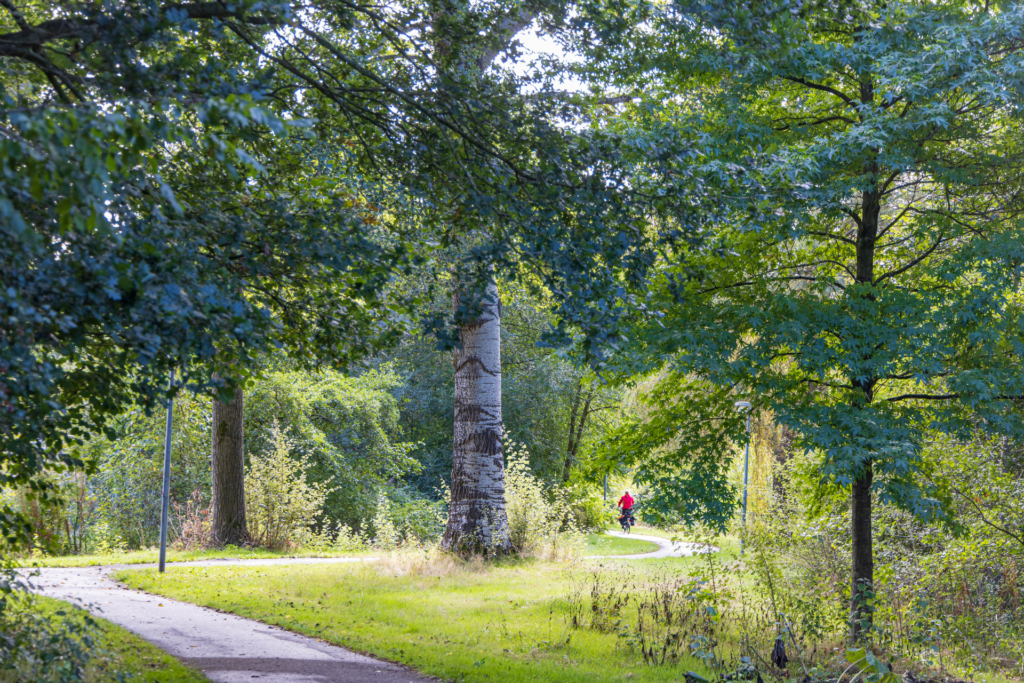
Groningen is a municipality with a strong and recognizable landscape. From open areas around villages to parks, streets, and green spaces in the city, the environment shapes how people live, move, and relax. Many residents notice that this is under pressure: green areas are disappearing, summers are hotter, and heavy rain increasingly causes problems.

The municipality faces the challenge of balancing growth with quality of life. This means that green spaces and nature are not afterthoughts but integral parts of every plan. Residents want to know what to expect and what decisions mean for their streets, neighborhoods, or villages. Early involvement gives participation real meaning and leads to plans that better fit the surroundings.

The Partij vóór het Noorden chooses sustainability that works in daily life. Not with grand words, but through practical, tangible steps: more shade in streets with plants and trees, less flooding, and clear support for energy-saving measures. We protect what is valuable and improve what can be better, respecting Groningen’s landscape and the people who live there.
What does the Partij vóór het Noorden want?

01 – Protect valuable green spaces

We set clear rules for preserving trees, parks, and special nature. Removal is only allowed when truly necessary and well justified. Residents notice this because green areas are preserved, and plans are better explained. For example, the ecological zone between Haren and Groningen must remain protected.

Duidelijke regels en consequente handhaving zijn daarom op hun plaats. Inwoners merken dit doordat groen niet zomaar verdwijnt en plannen beter worden uitgelegd. Zo moet bijvoorbeeld de ecologische zone tussen Haren en Groningen beschermd blijven.

02 – Full green compensation

If interventions are unavoidable, we ensure equal compensation in the neighborhood. This is set in advance and actively monitored, keeping both the quantity and quality of green at a high level.

03 – Green as a leading factor in development

For new construction projects, we assess impacts on nature and the living environment. Designs are adjusted where necessary, and residents see that plans better match the surroundings based on their input.

04 – More biodiversity in neighborhoods

We make space for flowers, shrubs, and animal nesting sites in streets and parks. Small initiatives, like façade gardens, are encouraged with simple rules. Less frequent mowing of verges increases wildlife and cools the area.

05 – Simple support for sustainability

We provide clear information and low-threshold assistance for insulation and energy savings. Programs are accessible online and offline. Residents experience less hassle and lower energy costs, while unexpected charges, for example from district heating, are avoided.

06 – Solar panels on roofs first

We promote solar panels on existing and new roofs. Large solar parks in the landscape are not a priority. This preserves open areas and ensures local energy production.

07 – Residents have a say

For larger energy or climate projects, residents are involved from the start. Only with demonstrable support do plans proceed. Feedback on decisions is a standard part of the process.

08 – Prepared for climate change

We invest in water retention, additional greenery, and smart street design to reduce heat and flooding. Effects are monitored through independent advisory bodies and evaluated every four years.

09 – Protect peace and quality of life

We set clear limits on noise and crowding at events and large venues. Enforcement is consistent and transparent, giving residents more calm and predictability.

10 – Animal welfare

The municipality must take responsibility for animal welfare within its boundaries and implement relevant policies. Reports of animal abuse are linked to investigations into domestic violence to protect both people and animals.

11 – Animal shelters

Animal shelters receive support where needed and enforcement is applied in case of violations. Public spaces are designed to include nature and animals. Development plans consider existing animals and, if necessary, provide appropriate compensation locally.

12 – Protect landscapes around villages

We maintain sand roads and characteristic village landscapes. Developments are evaluated for their impact on the landscape. This principle preserves the identity of Groningen’s villages.

13 – Hortus Botanicus Haren and the Biotoop

The Hortus Botanicus Haren should remain a peaceful, green space for nature, education, and meetings. The municipality works to connect it carefully with the Biotoop, strengthening both locations. All stakeholders are involved in creating a broadly supported plan. Preservation of tranquility, nature, and existing structures is central, with agreements set for 7–10 years to allow sustainable investments to pay off.

Daarbij staan behoud van rust, natuur en bestaande structuren centraal. We leggen deze afspraken vast voor een periode van 7 tot 10 jaar, zodat investeringen in verduurzaming kunnen worden terugverdiend.

Want to know more?

Sustainable choices and a pleasant living environment require a strong, fair economic foundation.
Read on to see how we handle economy and finances: carefully, transparently, and with attention to residents and entrepreneurs.

Scroll to Top